02 CAPITAL Growth system
Put capital to work deliberately
Investing
Build portfolios around goals, time, risk capacity, implementation costs, and the behavior required to stay invested.
02 / Sector promise Choose an investment process before choosing an investment product. Open the category map
Core guides
A practical place to start.
Learn the method, check the tradeoffs, then continue to a working tool or a connected guide.
Category map
Find the part of investing that matches the decision.
Filters change the map without creating deep category directories or moving guide URLs.
On smaller screens, swipe horizontally to reach every category filter.
01 Foundations Understand return, volatility, diversification, compounding, and the role investing plays.
- What outcome is this portfolio for?
- What loss can the plan withstand?
02 Stocks & funds Evaluate equities, index funds, ETFs, concentration, and ownership costs.
- What exposure is actually being bought?
- What is already duplicated?
03 Bonds & income Use duration, credit quality, yield, and cash-flow needs to assess fixed income.
- Is the goal income, stability, or both?
- What happens when rates change?
04 Portfolio construction Translate goals and constraints into allocation, rebalancing, and implementation rules.
- What is the strategic allocation?
- When is rebalancing allowed?
05 Real estate Compare direct property, leverage, cash flow, and listed real-estate exposure.
- Is this housing, business, or investment?
- What does leverage change?
06 Alternatives & digital assets Assess nontraditional assets through liquidity, custody, regulation, and portfolio role.
- What unique risk is introduced?
- How will the position be exited?
07 Research & valuation Connect business quality, cash flows, price, and uncertainty without pretending estimates are precise.
- What must be true for the price to work?
- Which assumption matters most?
08 Brokers & platforms Compare execution, custody, fees, account types, tools, and operational reliability.
- Which features are essential?
- Where are the hidden switching costs?
09 Taxes & costs Understand fees, spreads, taxes, turnover, and account placement before chasing headline returns.
- What return remains after friction?
- Can the same exposure be held more efficiently?
AI image · credits
AI-generated editorial image by Nortune · Photo reference: Andrea Piacquadio (Pexels License)A repeatable sequence
Portfolio decision ladder
Move from purpose to implementation in an order that prevents products from driving the plan.
- 01 Goal
Define what the capital must accomplish.
- 02 Time horizon
Match risk to when money may be needed.
- 03 Risk capacity
Separate emotional tolerance from financial ability.
- 04 Allocation
Choose the mix before individual holdings.
- 05 Implementation
Select accounts, funds, brokers, and costs.
- 06 Review
Use scheduled rules rather than market emotion.
Put it into practice
Use a working tool for investing.
Open the product page for privacy, assumptions, and limitations, or launch the browser tool directly.

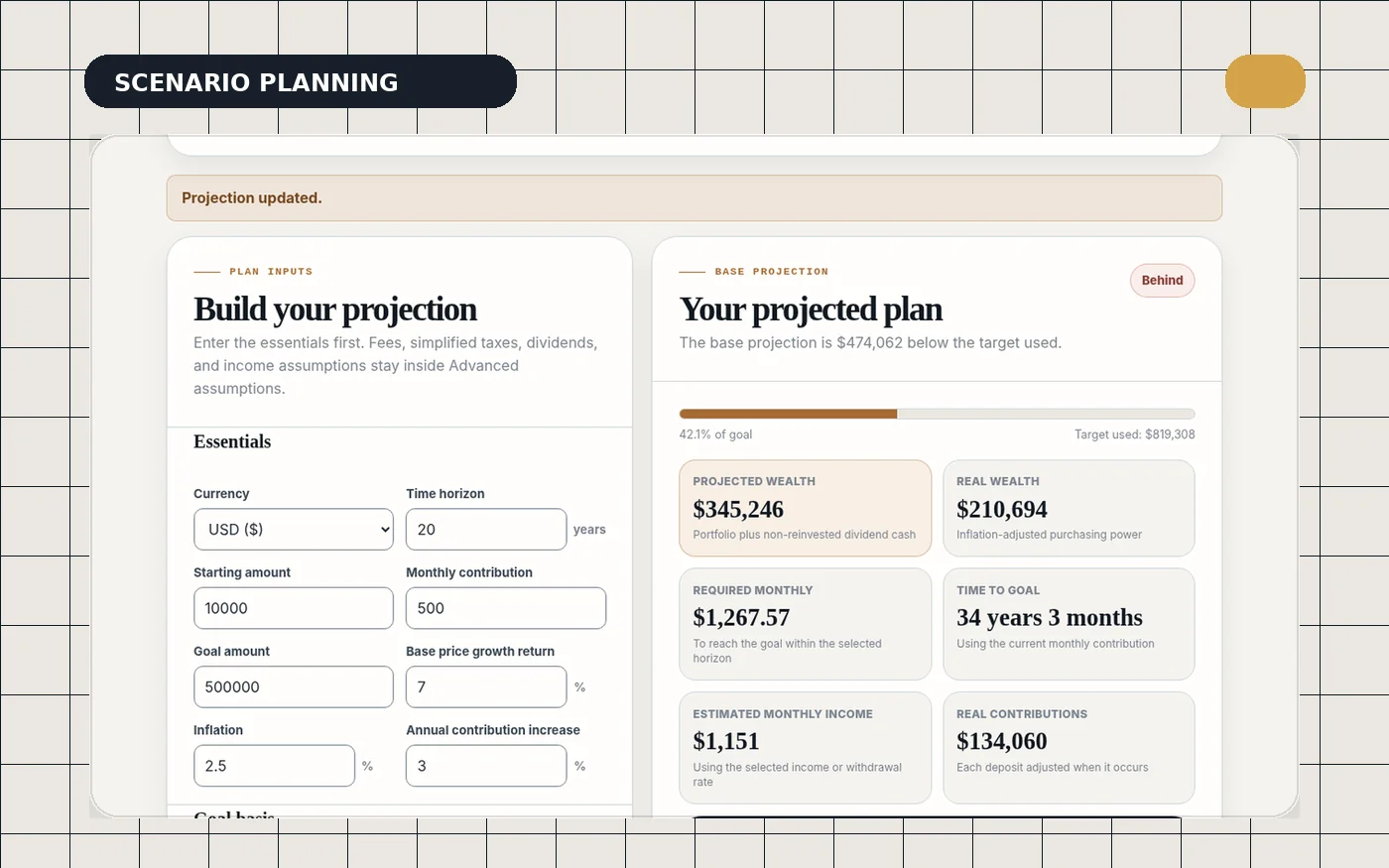
Investment & Savings Calculator
Compare low, base, and high growth scenarios, account for inflation and costs, and estimate the contribution required for a goal.
FreeLocal browser data
View details Open Calculator
Guide
Use the investing library.
Every entry keeps its canonical hub URL while categories remain flexible filters.
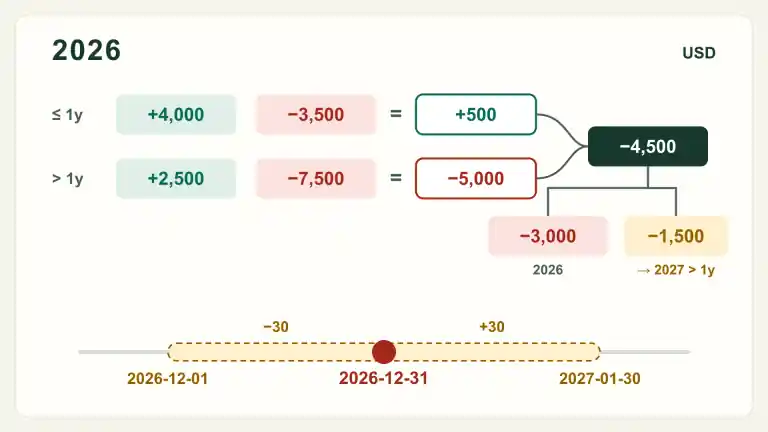 02 CAPITAL Tax-Loss Harvesting A harvested loss first cancels gains, then up to $3,000 of other income, and the rest carries forward with its character. Work the numbers before you sell. Open
  02 CAPITAL Tax-Lot Methods The shares selected for a sale determine adjusted basis, gain or loss, holding period, and which records must support the tax return. Open
  02 CAPITAL Webull Review A source-traceable review of Webull, including account types, investment access, total cost, safety, portability, and who the platform may fit. Open
  02 CAPITAL Brokerage Cash Sweep Uninvested brokerage cash may sit in a bank sweep, money-market mutual fund, or another position; the default can materially change yield and protection. Open
  02 CAPITAL Robinhood Review A source-traceable review of Robinhood, including account types, investment access, total cost, safety, portability, and who the platform may fit. Open
  02 CAPITAL Puerto Rico Investment-Income Sourcing A source-traceable guide to residency, payer and issuer location, pre-residency appreciation, reporting pathways, and the facts that need professional review. Open
  02 CAPITAL Public Review A source-traceable review of Public, including account types, investment access, total cost, safety, portability, and who the platform may fit. Open
  02 CAPITAL Moomoo Review A source-traceable review of Moomoo, including account types, investment access, total cost, safety, portability, and who the platform may fit. Open
  02 CAPITAL Groundfloor Review A source-traceable review of Groundfloor, including account types, investment access, total cost, safety, portability, and who the platform may fit. Open
  02 CAPITAL Fundrise Review A source-traceable review of Fundrise, including account types, investment access, total cost, safety, portability, and who the platform may fit. Open
  02 CAPITAL Fidelity Review A source-traceable review of Fidelity, including account types, investment access, total cost, safety, portability, and who the platform may fit. Open
  02 CAPITAL One-Page Investment Policy Statement A one-page investment policy statement turns goals and risk capacity into a repeatable contribution, allocation, and rebalancing process. Open
  02 CAPITAL E*TRADE Review A source-traceable review of E*TRADE, including account types, investment access, total cost, safety, portability, and who the platform may fit. Open
  02 CAPITAL Asset Allocation by Time Horizon Asset allocation works best when each pool of money is matched to its own date, flexibility, and ability to recover from loss. Open
  02 CAPITAL Compare Brokers A decision-first comparison of 11 brokers and investing platforms using official product, pricing, and regulatory information. Open
 Turn the page into action
Next-step checklist
- Write the portfolio goal in one sentence.
- Know the total fee and tax drag.
- Define a rebalancing rule before volatility arrives.
- Measure concentration across accounts, not account by account.