03 LEVERAGE Borrowing system
Use borrowing without losing control
Credit
Understand reports, scores, cards, loans, repayment, financing costs, and the protections available to consumers.
03 / Sector promise Treat credit as a tool with rules, not a verdict on your worth. Open the category map
Core guides
A practical place to start.
Learn the method, check the tradeoffs, then continue to a working tool or a connected guide.
Category map
Find the part of credit that matches the decision.
Filters change the map without creating deep category directories or moving guide URLs.
On smaller screens, swipe horizontally to reach every category filter.
01 Reports & scores Read reports, understand score factors, and separate monitoring signals from lending decisions.
- Which bureau and model are being used?
- Is the information accurate?
02 Credit cards Compare rewards, fees, interest, utilization, protections, and application timing.
- Will the balance be paid in full?
- Does the benefit exceed the fee and complexity?
03 Debt repayment Prioritize balances, negotiate terms, and build a repayment process that protects cash flow.
- Which debt causes the most damage?
- What payment is sustainable?
04 Personal & auto loans Evaluate APR, term, collateral, fees, and the cost of extending payments.
- What is the total repaid amount?
- What happens if income falls?
05 Mortgages Compare affordability, rates, points, closing costs, and the risks of leverage.
- What payment remains comfortable?
- How long is the property likely to be held?
06 Interest & financing Translate rates and terms into real cash cost before accepting financing.
- Is the rate fixed or variable?
- Which fee changes the effective cost?
07 Credit rebuilding Repair errors, stabilize payments, lower utilization, and rebuild evidence over time.
- What can be corrected immediately?
- Which behavior needs time to show?
08 Consumer protection Recognize disputes, collection rights, fraud response, and risky lending practices.
- Which law or regulator applies?
- What evidence needs to be preserved?
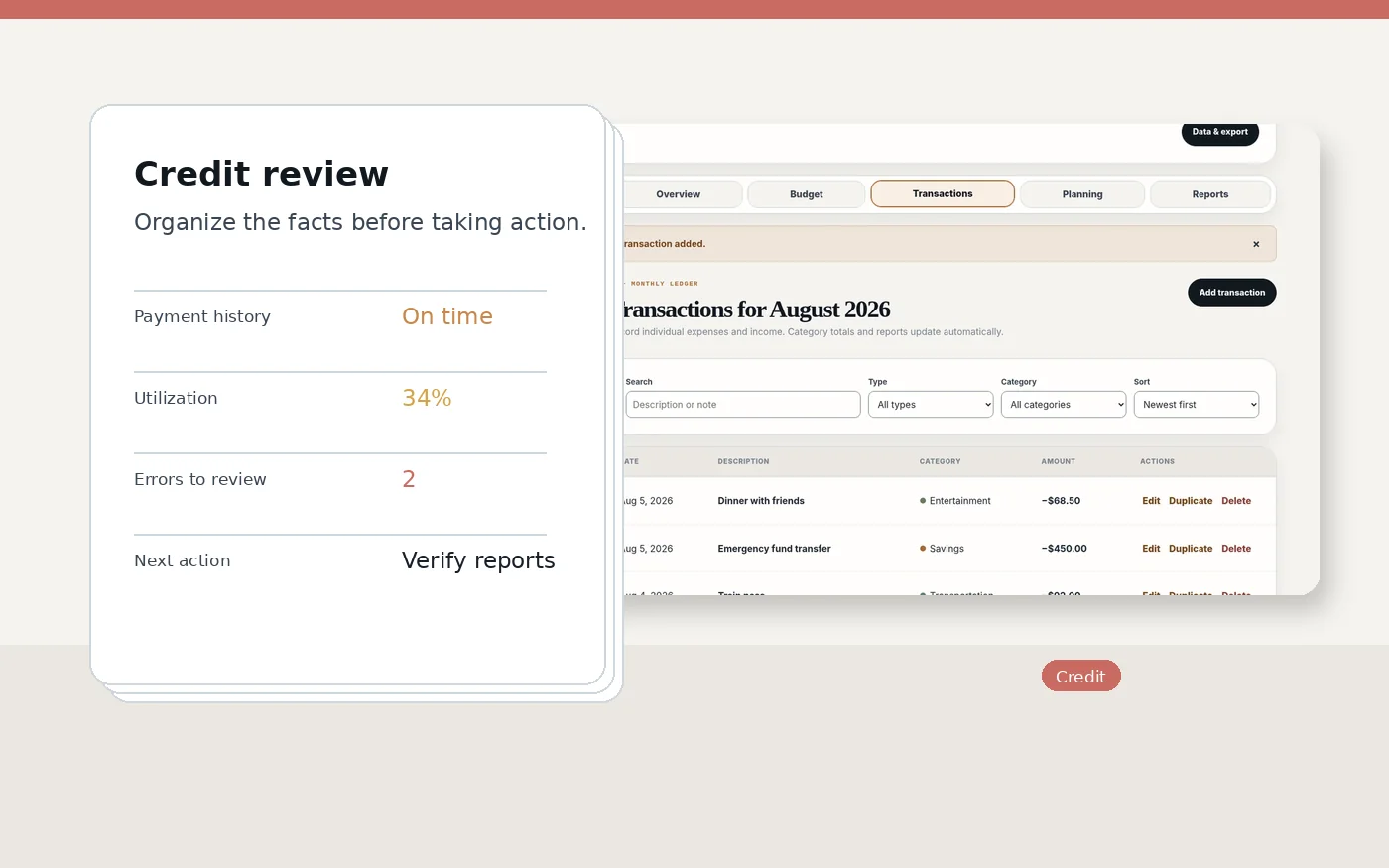
AI image · credits
AI-generated editorial image by Nortune · Photo reference: Kaboompics / Karola G (Pexels License)A repeatable sequence
Credit triage
Fix the record and stabilize the system before applying for more credit.
- 01 Reports
Pull the records lenders may review.
- 02 Errors
Document and dispute inaccurate information.
- 03 Payments
Protect on-time status and prevent new damage.
- 04 Utilization
Reduce revolving pressure where practical.
- 05 Debt
Choose a repayment or negotiation strategy.
- 06 Applications
Add new credit only when it serves the plan.
Put it into practice
Use a working tool for credit.
Open the product page for privacy, assumptions, and limitations, or launch the browser tool directly.
Debt & Cash-Flow Workspace
Compare five multi-debt repayment paths while protecting required minimums and an emergency-reserve floor.
FreeLocal browser data
View details Open App

Credit Card Payoff Calculator
Compare fixed, minimum-payment, and target-date plans, then see payoff time, interest, payment milestones, and the effect of extra payments.
FreeLocal browser data
View details Open Calculator
Loan Repayment Calculator
Model payments, total interest, extra principal, variable rates, balloon structures, lender offers, and refinance break-even.
FreeLocal browser data
View details Open Calculator
Guide
Use the credit library.
Every entry keeps its canonical hub URL while categories remain flexible filters.
 03 LEVERAGE Minimum Payment Trap A minimum payment is a contract requirement, not a payoff target. Measure what remains after interest, fees, and new charges to see whether principal is actually falling. Open
  03 LEVERAGE Emergency Fund vs. Debt A useful cash floor is large enough to stop ordinary shocks from recreating debt, but defined enough that expensive balances still receive a real payoff amount. Open
  03 LEVERAGE Debt Consolidation Break-Even One payment is simpler, but a lower monthly amount can hide fees, a longer term, a variable rate, or newly pledged collateral. Compare the complete paths. Open
  03 LEVERAGE Debt Repayment Order A durable repayment order protects minimums and liquidity first, then targets one balance using an explicit APR, cash-flow, or risk rule. Open
  03 LEVERAGE US Balance Transfer Break-Even For US credit-card offers, compare the fee and deadline in USD before deciding whether a 0% transfer fits your cash flow. Open
  03 LEVERAGE Credit Report Triage Credit report triage separates factual disputes from payment and balance strategy so the next action matches the actual problem. Open
  03 LEVERAGE Extra Car Loan Payments: How to Check They Reduce Principal An advanced due date does not answer the principal question; compare the transaction and balances on successive statements. Open
  03 LEVERAGE How Credit Scores Work A credit score is a model output based on report data; improve the underlying payment, balance, age, and application signals rather than chasing one number. Open
 Turn the page into action
Next-step checklist
- Review all reports before a major application.
- Calculate total borrowing cost, not only monthly payment.
- Keep dispute records and confirmations.
- Avoid adding complexity while rebuilding.